Bowman's Pro Turf, LLC.
Servicing the Wabash Valley since 1987
Fall Lawn Care Tips

Fall is a great time to get your lawn rejuvenated. Make the most of this cooler weather by following the tips below to make your lawn stand out during the rest of the growing season.
Mowing Height
While some people like to mow their lawns shorter, we recommend cutting now shorter than at least 3.5 inches. A taller mowed turf allows the plant to thrive, crowd out weeds, develop stronger roots, and provide for better health. During the fall, the turf plant begins to focus on energy storage for the upcoming winter months. Mowing taller allows the plant the most opportunity for the turf to build a great foundation for the upcoming dormancy season and will give your turf an overall better appearance going into next spring.
Fall Fertilizer
As stated above, the turf plant is going to begin changing its metabolic cycle from energy production to energy storage. A healthy fall fertilizer with a balanced blend of N, P, and K will allow the plants to really thrive in the coming months. Energy storage is primarily held in the roots so using a fertilizer that provides a constant and sustained feeding will give the most benefit to your lawn.
Fall Aeration
Aeration is the process of pulling plugs from the soil and breaking up the root structure of the plant. This gives multiple benefits to the lawn including easier airflow through the roots, breaking up soil compaction in the top layer of soil, and increased nutrient movement. This process also cuts the roots of the turf plant, which in turn, promotes newer and stronger root development. This is key to the plant nutrition storage.
Leaf Removal/Mulching
As the trees begin to change and leaves drop on the lawn, it is very important that you do your best to remove them as soon as possible. The best solution is to simply mow over the leaves to mulch them up. By doing this, you are allowing the leaf material to return back to the soil and providing more organic matter for microbes to feed on.
Seeding?
While we say “Fall is the best time to seed,” we really mean late summer between August and September. If you have time or opportunity to seed, do so before September 30th. This will give the seed plenty of time to germinate before the first frost if properly watered.
Benefits of Core Aeration

As we transition from the hot summer months to the cooler fall season, lawns may need some extra attention to help recover and prepare for winter dormancy. It is crucial to consider the following things when planning your fall lawn care application schedule.
Did your lawn suffer heat and drought stress?
As cooler temperatures and rain return to the forecast, cool season turf will begin to grow more rapidly. This growth is necessary for your lawn to begin to recover. With heat and drought stress taking hold on cool season turf, it may have gone dormant. The seasonal browning of the turf during these stressful conditions is nothing to be concerned about.
Brown Spots and Fungus!
We often receive calls after long periods of dew and warm nights of brown spots taking over a lawn. If you look close in the morning you can see tiny white hairs or webs growing in the turf. This is one of the easiest identifiers of turf disease. Weak root systems and compacted soil can promote disease growth. Aeration will not only loosen the soil to encourage more airflow through the soil but also drive root growth down. Stronger roots build the foundation for a healthier plant system.
Clay Soil
Many lawns in the Wabash Valley were established on clay soils. Over time, the clay will compact. Hard compacted clay makes it very difficult for plants to create healthy root profiles. The compacted soils also make it very difficult for nutrients to move freely. Soils that are bound together restrict the movement of water, air, and nutrients from your lawn. The more often you can aerate your lawn, the healthier it can become.
Armyworms In The Wabash Valley
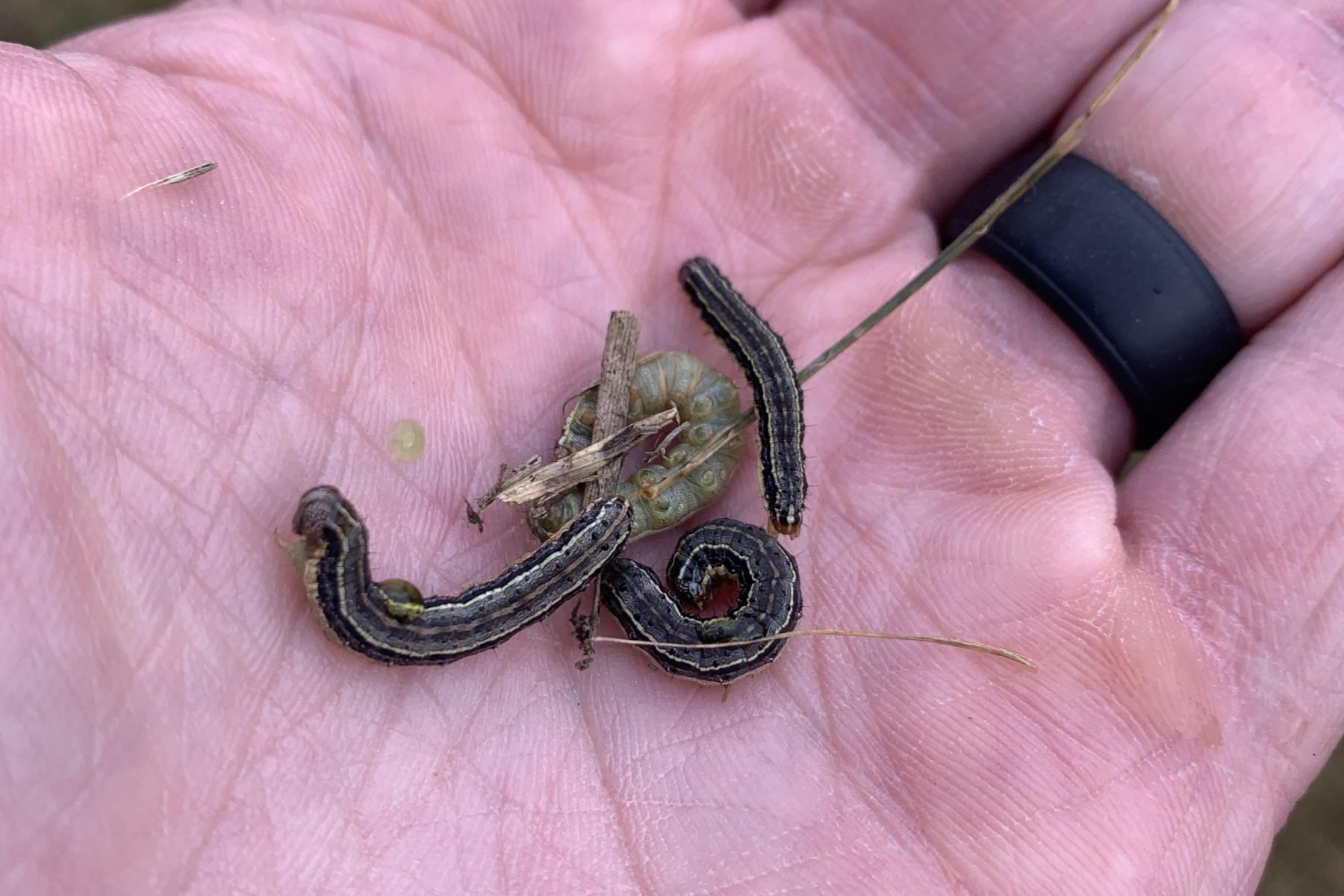
Army Worm Infestation
Over the last week, we have seen an outbreak of fall armyworms in the Wabash Valley. In our 34 years in business, we have only had about a dozen lawns affected by armyworms. In the last week, we are seeing the largest outbreak since the 1970’s according to many universities. This email is intended to educate and inform our customers about what we are seeing in lawns and what can be done to help remedy the issue.
What, why, how?
We are seeing the larval stage of the armyworm infest the Wabash Valley. These caterpillar-type insects come in several colors but appear to be mostly black or brown with stripes. They will feed primarily on cool-season turf grasses and agricultural crops. As an adult, the armyworm is generally a gray moth with a 1 1/2 inch wingspan. Entomologists do not have a real answer to why Armyworms are so widespread this year other than weather patterns. Winds allowed for dispersal, and ideal moisture has allowed for high fecundity and survivability. Typically natural enemies help keep the population in check.
Since this is a very rare occurrence in the Wabash Valley, we are trying to learn as much as we can about this insect and the impact that it is having on lawns. Because of the life cycle, feeding habits, and resistance to pesticides, a preventative application would not have had any effect on the current outbreak. Not every lawn will be impacted by armyworms but it is good to understand them and know what to look for on your own.
The armyworms are only feeding on the foliage. Areas can look scalped, or they can brown out when foliage dehydrates quickly during feeding. The turf should recover. I’d fertilize it and encourage growth. If the crown is exposed, water lightly in the heat of the day to prevent the crown from drying out.
In the last week, we have made several service calls and discovered armyworm damage. It first appears as drought stress but can spread quite fast as the insect is feeding. Below are pictures of armyworm larvae, damage, and eggs.

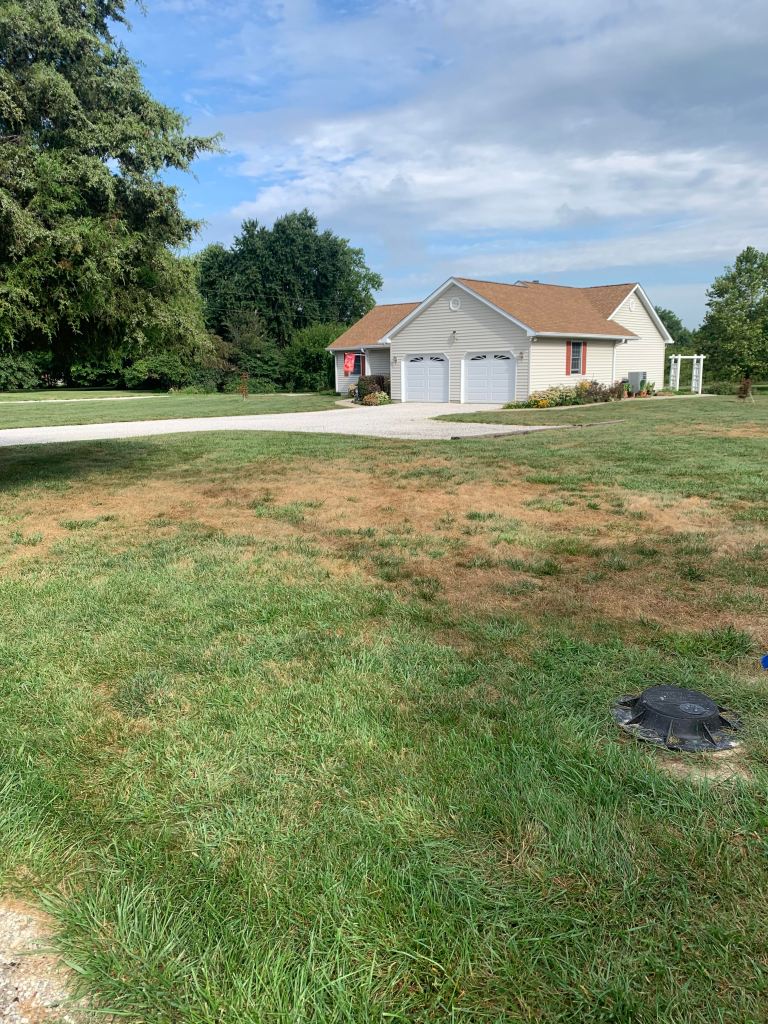


Moving Forward…
There are a few easy ways to check for armyworms on your lawn.
1) Get down and dirty in your grass. Look for the actual worms. They are always on the surface of the turf and are about 1-2 inches long.
2) Pull the turf. If the grass comes up but the roots stay in the ground, that’s a very good identifier of armyworm damage.
3) Look for signs of armyworm eggs. These eggs look like white masses and are usually found on structures and buildings. I have found some this morning on our clothesline post as pictured above.
Armyworms feed on the leaf tissue but leave the crown and roots of the grass intact. Insecticide can be used to spray and kill armyworms to stop the current feeding damage, but it will not reverse the damage once done. Insecticides will only be effective in early instar stages of the armyworm. Once feeding begins, there is a very short window to successfully apply an insecticide that will kill the worm. Once you notice damage, the armyworm is usually on day 2 or 3 of their 5 day feeding cycle. It is almost always too late to apply an insecticide at this point. If you feel that an insecticide treatment is warranted, choose one that contains bifenthrin, cyfluthrin, or carbaryl (Sevin). Always read and follow all labeled instructions of any products that you apply. If you have questions, consult a professional licensed applicator.
Ultimately, irrigation and a proper fertilizer program will be the best thing for the turf to regrow and recover. Purdue University is not suggesting an insecticide treatment for our area as the armyworms will no survive in our climate and it is not expected for us to see any more generations to cause future damage.
The recommended recovery strategy is to irrigate, fertilize, apply insecticide (only if worms are still actively feeding on turf), overseed and aerate. Insecticide treatments at this time will not be effective as many of the armyworms have begun to dig into the soil to pupate.
Summary
The fall armyworms in the Wabash Valley is a very rare event. Entomologists have not seen a recorded infestation at this level in at least 40 years. Insecticide treatments may help, but only if the worms are small and actively feeding. The feeding stage of the armyworm lasts 4-5 days maximum. They only feed on the foliage and will not kill the plant. Proper irrigation and a healthy fertilizer program will encourage plant regrowth and lawns should recover over the coming weeks. If you decide to apply an insecticide, always read and follow all labeled instructions. Consult a licensed professional if you have questions.
 Bowman's Pro Turf, LLC.