Bowman's Pro Turf, LLC.
Servicing the Wabash Valley since 1987
Mid-Season Winter Weeds: What are they?

Mid-Season Winter Weeds. What are they? Isn’t it almost Spring?
As soil temperatures continue to rise, we are seeing more and more weeds being to “pop” throughout the Wabash Valley. As the growing seasons change, we see a change in the kinds of weeds on properties and adjust the products that are used.
First, let’s discuss some basic definitions to help guide the understanding of these biological life cycles. A perennial is a plant that can flower and grow during a regular growing season, die back in the winter, and regrow the following year. Simply put, you will see this plant year after year if no outside factor comes into play. Another common term you may hear is “winter annual.” This refers to plants that germinate in the fall, survive the winter, and die the following spring. For this article, we will broadly discuss a few of these common weeds we are seeing as we move into March.

Annual Bluegrass
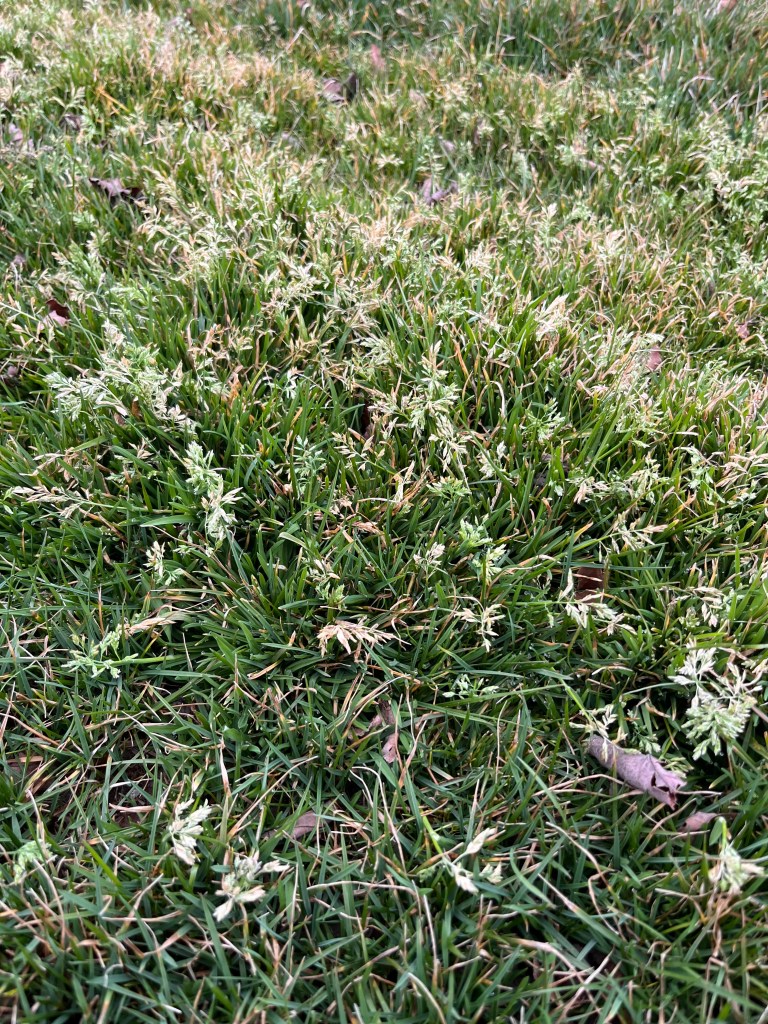
Annual bluegrass is the most common grassy weed that we see in turf. While this weed may look like regular grass, it has some key characteristics that make it stand out in a well-maintained lawn. This plant produces an abundance of seed heads at low growth and appears as a light green and even yellowish color. This color difference and seed head production really can be an eyesore in the early months of the growing season.

Purple Deadnettle
Purple Deadnettle can be easily identified from the purple flowers and darker leaves. While it is closely related to another weed on this list, it can be easy to tell apart if you know what you are looking for. The stem, when rolled through your fingers, is square. This winter annual typically germinates in soil that has been disrupted in the fall. You can typically see purple deadnettle in fields or other areas that may have been worked up the previous season.
Henbit
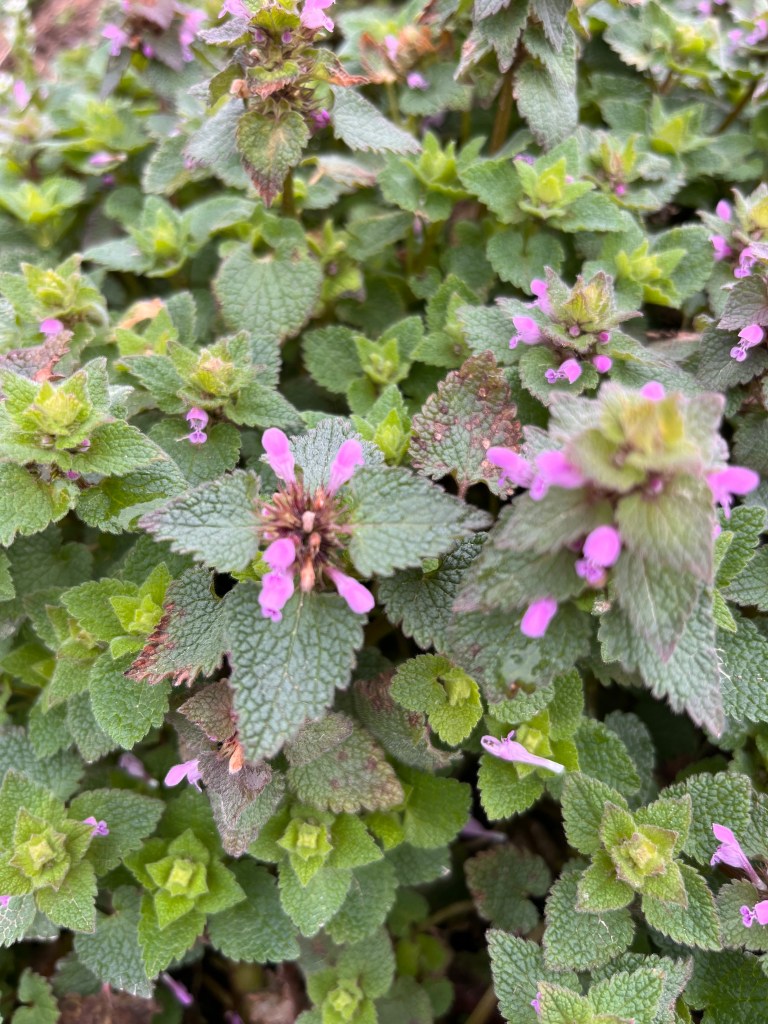
Henbit and purple deadnettle are sometimes confused with the other but some key features help distinguish the two. Henbit has weak stems, and it is low-growing. The leaf tissue is not as elongated is appears more green than purple deadnettle. It is often found in thin turf, garden areas, or landscaping.


Hairy Bittercress
Oftentimes, hairy bittercress and Shephard’s Purse are misidentified from a distance but upon closer inspection, it is easy to distinguish between the two. Hairy bittercress is also a winter annual that begins germination as early as September. A small rosette of leaves will overwinter and the following spring, long slender seed pods and small white flowers will grow along the stem of the plant.
Shephard’s Purse
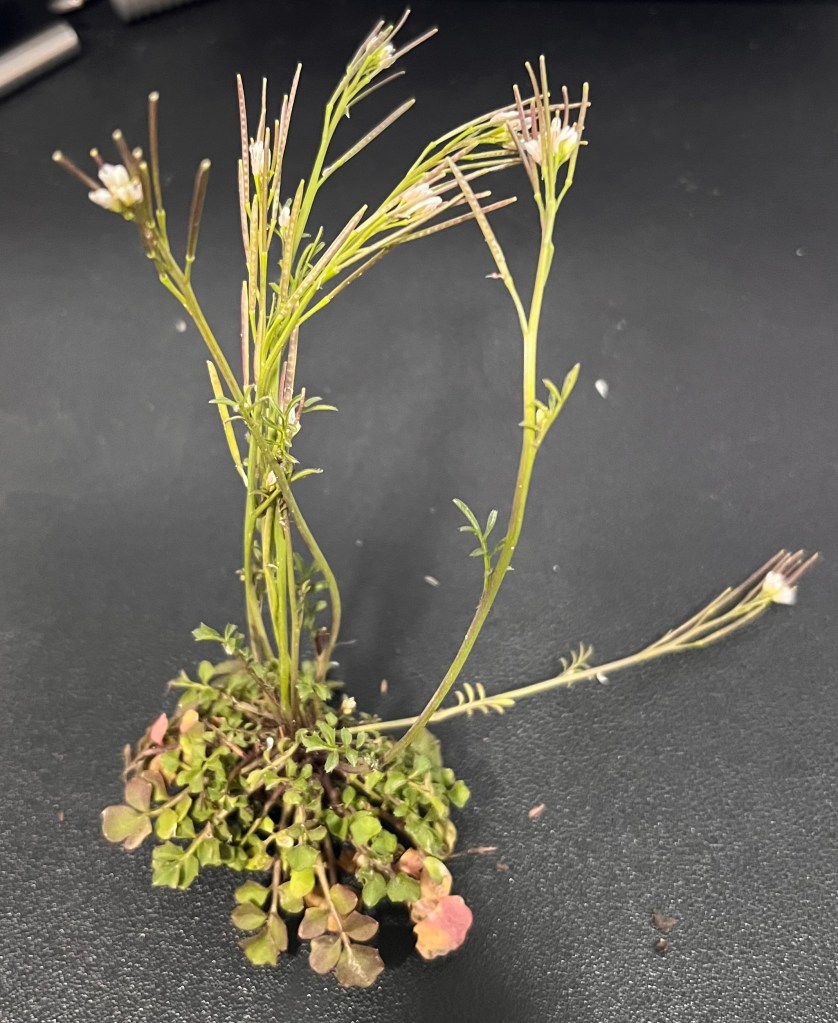
Shephard’s Purse begins as small flat rosettes and as it matures it produces a flowering stem. A feature that is used to help identify shepherd’s purse are small white flowers and heart-shaped leaves. Again, this weed thrives in disturbed soil but typically will not last in established turfgrass areas. From a distance, shepherd’s purse looks similar to hairy bittercress.
Conclusion
While these weeds do die on their own as the temperatures rise, management is crucial to maintaining a healthy turf. Properly timed preemergent for annual bluegrass and late fall post-emergent herbicides will go a long way to keeping turf clean moving into the Spring months. Because many of the broadleaf winter annuals begin their germination in the Fall, it is important to not skip the late-season herbicide treatments if you are looking for a healthy lawn the following season. These weeds often begin to show well before soil temperatures allow for proper post-emergent herbicide spraying to occur in the spring so it is even more vital for a late fall weed control application to be made to help combat these winter and early spring weeds.
Why Do We Start So Early?
One question that we sometimes are asked is “Why do you start your application season so early? The grass is not even growing yet so isn’t this pointless?”
Everything that we do in lawn care has some kind of timing requirement involved that will help determine when and what products can be applied to the turf. Air temperature, wind speed, time of year, and soil temperature, are a few things we monitor to make sure your applications not only are effective but efficient on your property.
Crabgrass preemergent requires early application for the best results. Soil temperatures are closely monitored to ensure the right product is put down at the right time. For purposes of this blog, I will use the trade name of the product to try to keep it less confusing. With that, let’s jump into it!
Crabgrass can begin germinating when conditions are right and will continue to germinate through the summer months. Known as a late summer annual, we usually see germination begin in April. If left untreated, one square foot of crabgrass can product 10,000 seeds. Proper application of a quality preemergent is required to ensure the best control, however, other factors such as mowing height, irrigation, turf density, and fertilization schedules all can improve the efficacy of the preemergent product applied.
If timing is so important, why do we begin our season in late February? Easy! The product needs to be on the lawn and irrigated into the soil to be active. Would it be ideal to apply a preemergent a few days before the crabgrass germinates? Absolutely. Is it realistic? Absolutely not! Many crabgrass products contain active ingredients that stay working in the soil for up to 6 months. A treatment we make on March 1st can still be effective in August! Beginning our treatments early allows us to ensure that the product can be watered into the soil, usually through rainfall, and be and remain active during the growing season.
There can be some crabgrass that does germinate during the growing season. We call this “Breakthrough.” This can and usually happens along edges, corners, and thin areas in the lawn. Areas that can see lot of traffic can break down the chemical barrier and crabgrass can “breakthrough” in those spots. A proper post emergent application is required to be made but the earlier it is caught, the easier it is to control.
Crabgrass applications also limit when you can reseed a lawn. A product containing prodiamine usually has a reseeding restriction that states “Wait 4 months before seeding following and application” while an application of Dimension may state “Do not overseed within 3 months of application.” Whatever product you use, make sure you consult the label for exact product use restrictions. These restrictions go further than just reseeding time but also turf grass that it is safe to be applied over.
Equally important to a successful crabgrass application is correct use rate. Oftentimes we see people try to save a few dollars and try to cut back on the amount of product applied to their lawn. Unfortunately, a lot rate application for a preemergent herbicide can create more work down the road if you do not properly plan ahead. Lower rates may be acceptable if a split treatment is planned. That means that you split 1 application into 2 but use the same total amount of active ingredient as if you were only making one treatment. This can be confusing and cause issues if soil temperatures jump and the preemergent herbicide you selected for the first 1/2 of the application do not have any post emergent activity.
For our company, we typically only focus our treatment schedule to have 1 full application for the crabgrass preemergent. As we move through treatment route, we monitor the soil temperature and lawns in general. Once we feel like we are getting close to germination, we switch from a strictly preemergent crabgrass product to product that has both pre and post emergent control.
I only discussed two different product names above but there are several different products on the market for crabgrass control. If you are making the application, be sure to do your research and select the best product that is labeled for your lawn. Timing of the application, turf type, soil temperature, application method, and amount to use are all crucial in ensuring you get the best results.
Should I seed in the Spring?

As winter begins to thaw in the Wabash Valley, many people are beginning focus on their lawn to begin planning the upcoming growing season. While we use the spring to plan our gardens and plant flowers, we need to be aware and remember that spring is not the best time to plant grass seed.
While the best time to seed a lawn in Indiana is between August and September, we do have a few exceptions to this rule. That does not mean that a spring seeding is foolproof and does not require some patience. A spring seeding may be necessary on a lawn or area that is completely bare of any desirable turfgrass. This could be from winter damage, a new construction project, or a change in landscape layout. Waiting until August may not be ideal so if you have to seed in the spring here are some key things to remember.
Weed Control
When you plant any grass seed, you must be aware that you will face serious limitations on what kind of weed control can be applied and when. For a spring seeding, be sure to avoid any kind of crabgrass preemergent to the areas you wish to grow new grass seed. The crabgrass preemergent can hinder the root development of new seedlings and prevent proper germination and growth. It is also typically recommended, as per the herbicide label, to not apply any post emergent herbicide until you have mowed the newly established grass at least 4 times.
Water
Anything you plant will need water. If you decide to do a spring seeding while the ground is still frozen, the moisture in the soil may be enough to get things moving but you still need to consider that you may have to provide additional water to sustain the plant life. Seed requires soil temperature to be in the mid 50’s before it will begin to think about germination so you may be looking at early April before you see new grass growth. Begin watering as temperatures allow.
Heat/Drought Stress
Since the new grass will be young and tender going into Summer, make sure you keep up on irrigation and a nutrition plan. The new grass will have to be monitored as it will not have developed a full and strong root system before the heat and drought stress of June and July move in. Plan to continue to apply water several times a week to these seeded areas to ensure you do not have too much die off from these stressors. Usually by this time you can begin to apply herbicide. Be cautious when applying herbicide to new grass that is under drought stress as it can harm and stunt its development.
Reseed in August/September
No matter how successful you think your spring seeding turns out, consider a proper overseeding in August/September. This will ensure the area continues to fill in and you can achieve even better results.
Anything you do in a lawn or landscape is a process and does take time. Growing a thick and healthy lawn sometimes requires more patience than products as we sometimes have to sit back and wait for things to happen on their own in nature. A plant can only take up nutrients so fast and water provided through rain may not be enough to sustain a turf.
As long as you keep in mind the above points, you may be able to complete a successful spring seeding.
 Bowman's Pro Turf, LLC.