
Over the last 5 years, the Wabash Valley and Midwest have seen an increase in turf destroying insects. While we have focused primarily on white grub control, it is now time to add to our list of threats to our lawns and landscapes. When thinking of a grub preventative program, it is now more important than ever to be sure your insecticide includes control for more than just grubs.
In 2024 we made a drastic change in the insecticide that we used on turf for our grub preventative program. While the chemistry for imidacloprid (Merit) has its place in the lawn care industry, it was time to make a change. For many years, Merit was a great product to use for a grub preventative program, however, with the increase in other turf destroying insects, a change was needed in our program to ensure we provided the right protection for lawns. Merit works well against grubs but does not work against caterpillars. We needed to switch to a product that provided control for a wider range of insects. We also found that Merit has a small window of application and only provided preventative control with no curative control if an early emergence of grubs appeared. This limited our ability to keep up with the ever changing environment we have seen over the last 5 years.
Moving forward, our grub preventative program will now control more than just white grubs. The product we are using will not only control white grubs but also armyworms, annual bluegrass weevil, billbugs, European crane fly, spittlebugs, cutworms, sod webworms, and provide suppression for chinch bugs. This product can be applied from early spring to as late as September for both a preventative and curative solution to turf destroying insects.
Below are just a few local examples of some of the insects that we will now have great control over with our improved Grub Preventative Plus. We are calling it Grub Plus because of the added benefit of controlling more than just white grubs. All customers who already have our grub preventative treatment scheduled will receive these great control benefits for their property. If you are interested in adding this highly effective treatment to your program, please reach out and we can get it scheduled.
Armyworms
In 2021, we saw our first glimpse of what was to come when armyworms invaded the Wabash Valley. These pests were brought to us through the winds of tropical storms and settled on our lawns, destroying them overnight. Since 2021, armyworms have been found in Indiana. Damage will likely continue as these pests travel up through tropical storms and land in the Wabash Valley.


Billbugs
The most common lawn destroying pest in Indiana is the bluegrass billbug. While bluegrass is in the name, it does not discriminate against cool season grass types and has even been known to attack warm season grasses. In 2024, we sent several samples to the Purdue Plant and Pest Diagnostic Laboratory and almost all of them came back with billbug damage. Billbug damage is the most commonly diagnosed insect-related turfgrass issues in North America. Damage begins at the crown and root of the plant and progresses from the feeding of the insect.


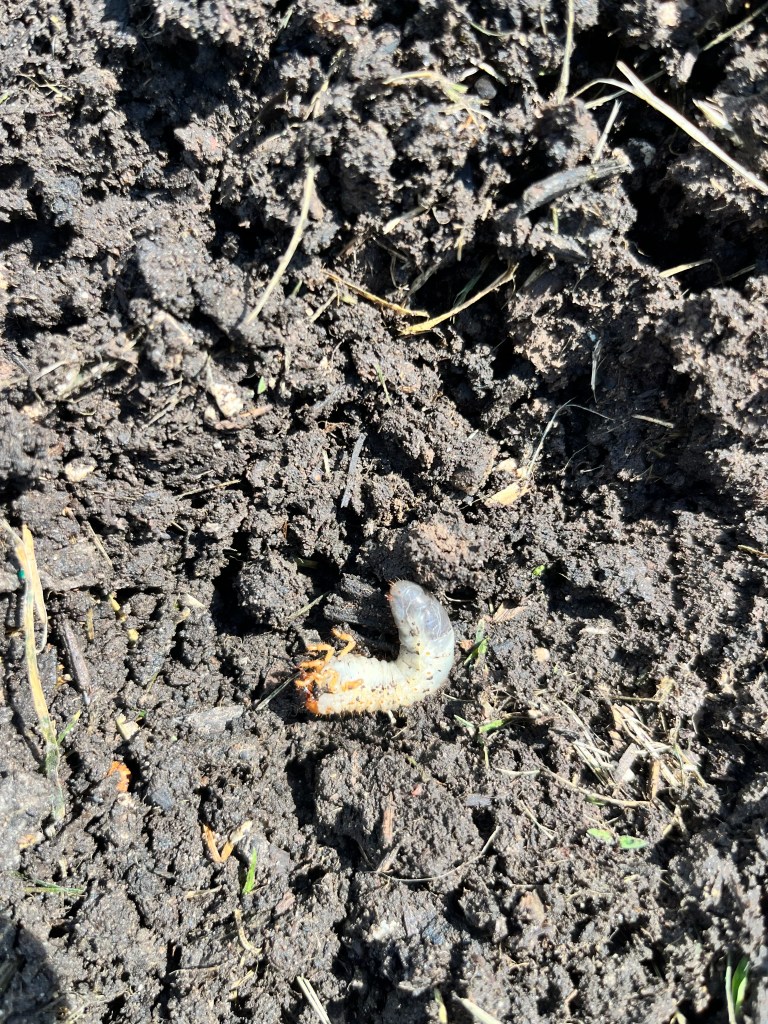
White Grubs
White grubs are probably the most commonly thought of turf destroying insect among homeowners. While there are several kinds of species of grubs: Masked Chafer, Japanese Beetles, European Chafer, Green June Beetle, and Oriental Beetle; the damage and life cycle are all similar. Grub damage can appear as brown spots and slowly spread, similar to billbug damage. To be sure, we use what is called a tug test to see if the turf pulls away from the soil. Damage from white grubs happens both from the grubs feeding on the turf and from animals such as skunks, racoons, and turkeys foraging and feeding on the grubs.

 Bowman's Pro Turf, LLC.