
Mid-Season Winter Weeds. What are they? Isn’t it almost Spring?
As soil temperatures continue to rise, we are seeing more and more weeds being to “pop” throughout the Wabash Valley. As the growing seasons change, we see a change in the kinds of weeds on properties and adjust the products that are used.
First, let’s discuss some basic definitions to help guide the understanding of these biological life cycles. A perennial is a plant that can flower and grow during a regular growing season, die back in the winter, and regrow the following year. Simply put, you will see this plant year after year if no outside factor comes into play. Another common term you may hear is “winter annual.” This refers to plants that germinate in the fall, survive the winter, and die the following spring. For this article, we will broadly discuss a few of these common weeds we are seeing as we move into March.

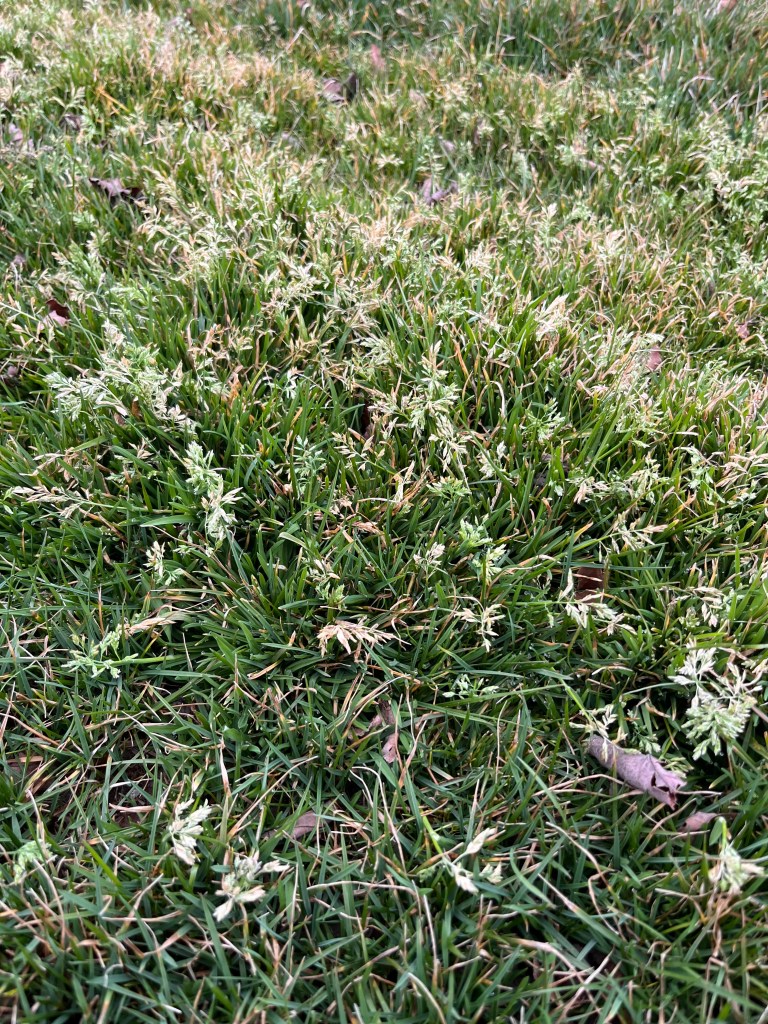
Annual Bluegrass
Annual bluegrass is the most common grassy weed that we see in turf. While this weed may look like regular grass, it has some key characteristics that make it stand out in a well-maintained lawn. This plant produces an abundance of seed heads at low growth and appears as a light green and even yellowish color. This color difference and seed head production really can be an eyesore in the early months of the growing season.

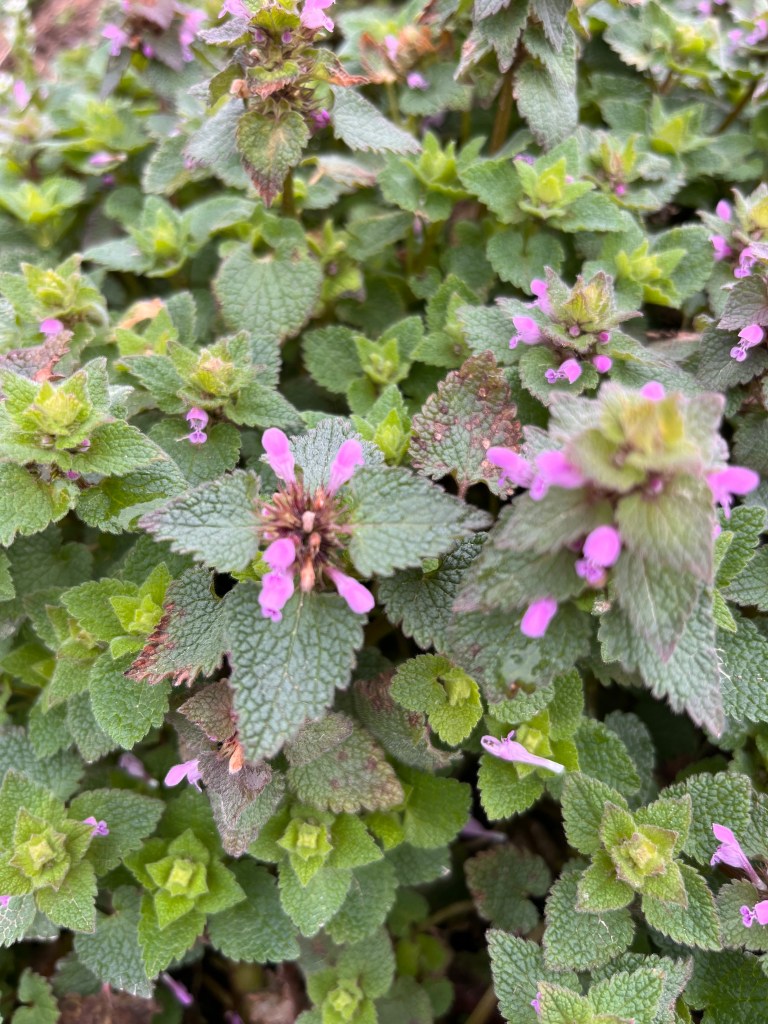
Purple Deadnettle
Purple Deadnettle can be easily identified from the purple flowers and darker leaves. While it is closely related to another weed on this list, it can be easy to tell apart if you know what you are looking for. The stem, when rolled through your fingers, is square. This winter annual typically germinates in soil that has been disrupted in the fall. You can typically see purple deadnettle in fields or other areas that may have been worked up the previous season.
Henbit
Henbit and purple deadnettle are sometimes confused with the other but some key features help distinguish the two. Henbit has weak stems, and it is low-growing. The leaf tissue is not as elongated is appears more green than purple deadnettle. It is often found in thin turf, garden areas, or landscaping.


Hairy Bittercress
Oftentimes, hairy bittercress and Shephard’s Purse are misidentified from a distance but upon closer inspection, it is easy to distinguish between the two. Hairy bittercress is also a winter annual that begins germination as early as September. A small rosette of leaves will overwinter and the following spring, long slender seed pods and small white flowers will grow along the stem of the plant.
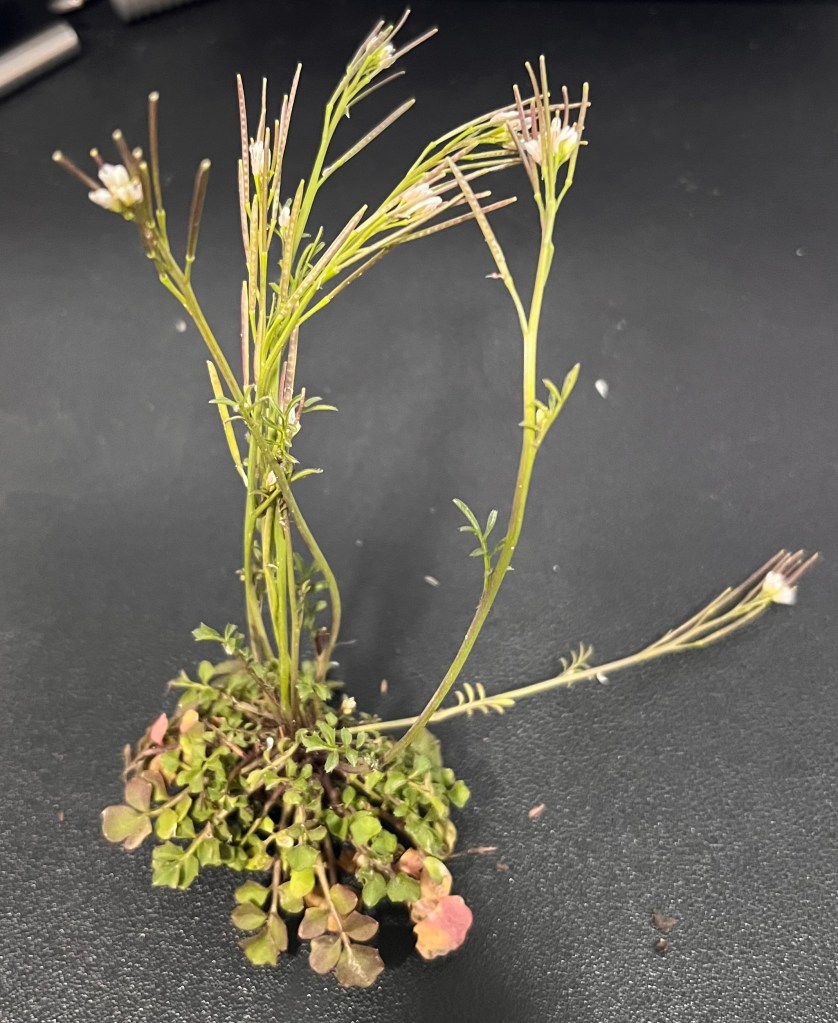
Shephard’s Purse
Shephard’s Purse begins as small flat rosettes and as it matures it produces a flowering stem. A feature that is used to help identify shepherd’s purse are small white flowers and heart-shaped leaves. Again, this weed thrives in disturbed soil but typically will not last in established turfgrass areas. From a distance, shepherd’s purse looks similar to hairy bittercress.
Conclusion
While these weeds do die on their own as the temperatures rise, management is crucial to maintaining a healthy turf. Properly timed preemergent for annual bluegrass and late fall post-emergent herbicides will go a long way to keeping turf clean moving into the Spring months. Because many of the broadleaf winter annuals begin their germination in the Fall, it is important to not skip the late-season herbicide treatments if you are looking for a healthy lawn the following season. These weeds often begin to show well before soil temperatures allow for proper post-emergent herbicide spraying to occur in the spring so it is even more vital for a late fall weed control application to be made to help combat these winter and early spring weeds.
 Bowman's Pro Turf, LLC.